A system breakdown structure from a top-level need
Start from the top-level need and let Reqi's AI propose a complete system breakdown structure: the decomposition into subsystems and components, suggested boundaries between them, and the managers and reviewers for each. The decomposition follows INCOSE systems engineering principles, so the structure lines up with recognised practice from the outset rather than with whatever shape your spreadsheet took.
What used to take a systems engineer days of whiteboarding takes minutes, and what you get is a coherent, traceable hierarchy to refine. Add, rename and move systems by hand, or point REX at your project documents and let it draw the architecture from them.

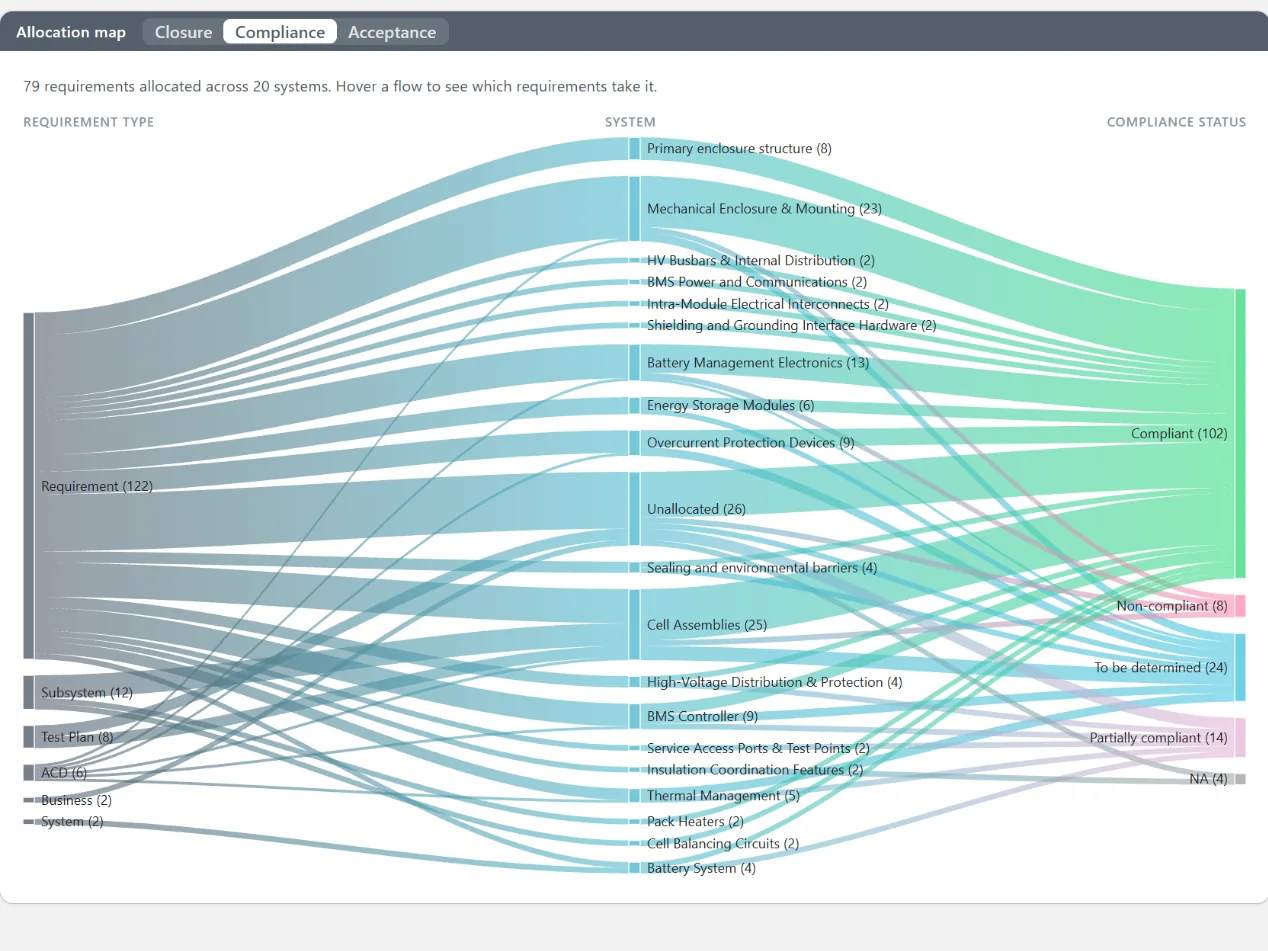
The allocation map
Every requirement is allocated to its place in the structure. The allocation map shows the flow from each requirement type to the systems that carry it, coloured by compliance status, so you can see in one view which systems hold the most requirements, where the non-compliant ones sit, and which requirements have no system yet.
Allocation is reviewed and agreed rather than simply edited, and a team member who is not an approver can request a change that shows as pending until it is decided. That matters when the systems belong to different suppliers; see supply chain requirements management.
The network diagram: the whole programme in one picture
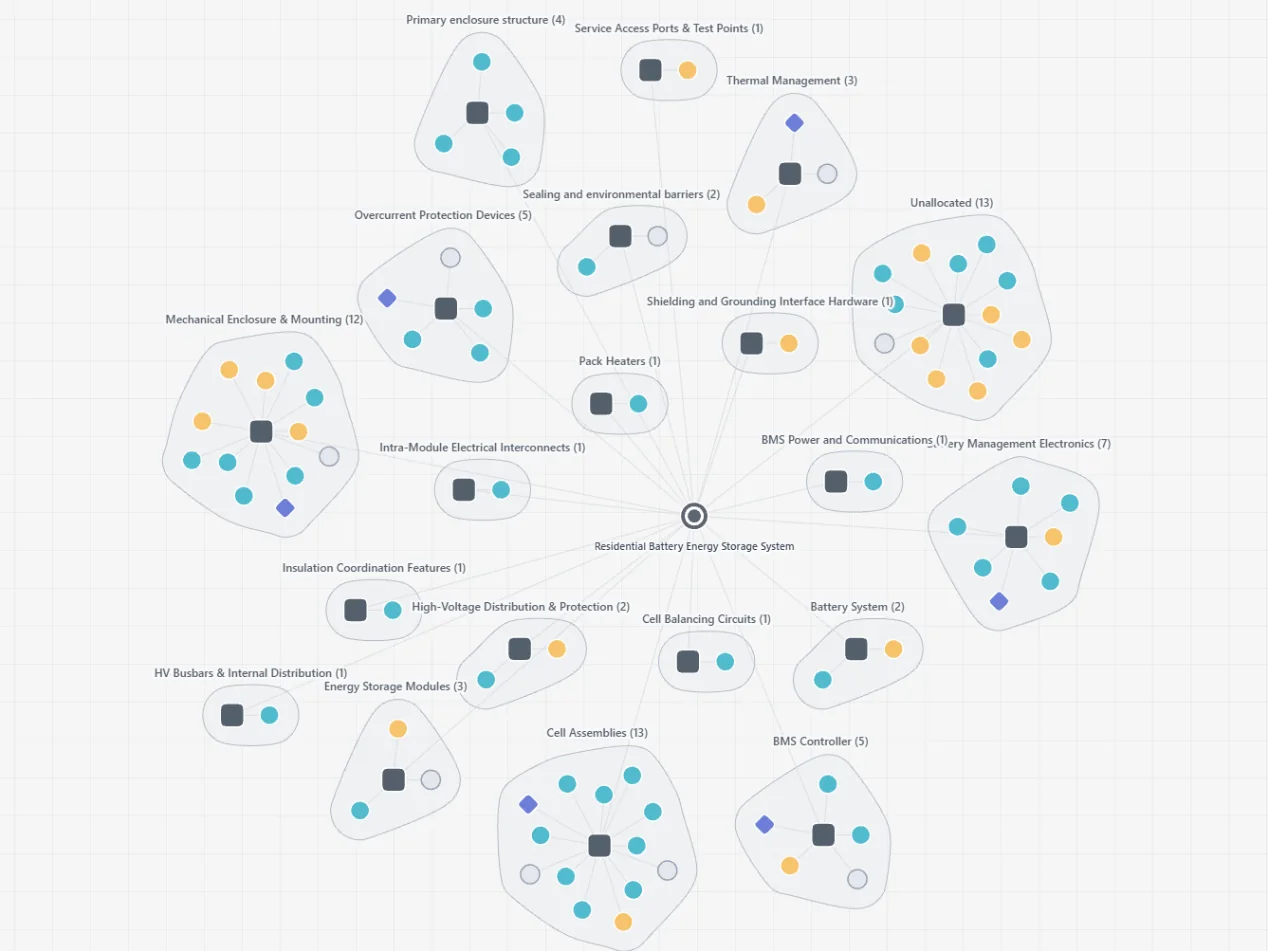
Reqi's AI maps every requirement to its place in the architecture and renders an interactive network diagram of the whole programme. Requirements cluster around the subsystem they are allocated to, dependencies are drawn across interfaces, and orphaned or overloaded elements stand out. Thousands of rows become a single picture of system health and coverage, which is the view a design review actually needs.
Click a system to open its requirements, or switch to the tree view to follow a single requirement down through the levels. The two views are the same register, so what you change in one is already changed in the other.
Levels, boundaries and interfaces
A breakdown structure is only useful if the levels mean something. In Reqi a system at any level has its own owner, its own allocated requirements and its own compliance status, and a requirement can be flowed down from a parent system to the subsystems and components beneath it. Boundaries are where interface requirements live, and the network diagram shows the dependencies that cross them.
If you want the thinking behind the structure before you build one, the articles cover what systems architecture is, what a subsystem is, how to tell a system from a subsystem and how to define system boundaries.
What Reqi is not. Reqi is not a SysML or MBSE modelling tool. It holds the breakdown structure, the requirement allocation and the traceability, and it draws the architecture from that data. If your programme runs a SysML model, Reqi is the requirements register beside it. Our articles on MBSE and modelling versus drawing tools explain the distinction.
Flow-down and traceability
Once the structure exists, REX flows each high-level requirement down through it, deriving subsystem and component sub-requirements and allocating them to the right part of the architecture, level by level. Every derived requirement points back to its parent, so you have full top-to-bottom traceability from the need to the component. How that chain works, and how it is verified, is on the requirements traceability software page.
What it costs
$190 per month, plus GST
Per project, for one to five projects. Unlimited users on every plan.
A single project is free for three months, up to 500 requirements, with unlimited users and no card. Full detail on the pricing page.
System architecture in Reqi: frequently asked questions
Is Reqi an MBSE or SysML tool?
No. Reqi holds the system breakdown structure, the allocation of requirements to systems and the traceability between them, and it draws the architecture from that data. It sits beside a SysML model rather than replacing one.
How do I build the breakdown structure?
Three ways: give Reqi a top-level need and let the AI propose the decomposition, point REX at your project documents and let it draw the architecture from them, or add and arrange systems by hand. Most teams start with the proposal and refine it.
Does each system have an owner?
Yes. Each system carries a designer, a reviewer and a verifier, and the roles decide who can edit, who can review and who can close the requirements allocated to it.
Can I see which requirements are not allocated to any system?
Yes. Unallocated requirements show on the allocation map and in the register, and orphaned elements stand out on the network diagram.
Build the structure for one project
Three months free, 500 requirements, unlimited users, no card.
Get started free Book a demo