The stakeholder map
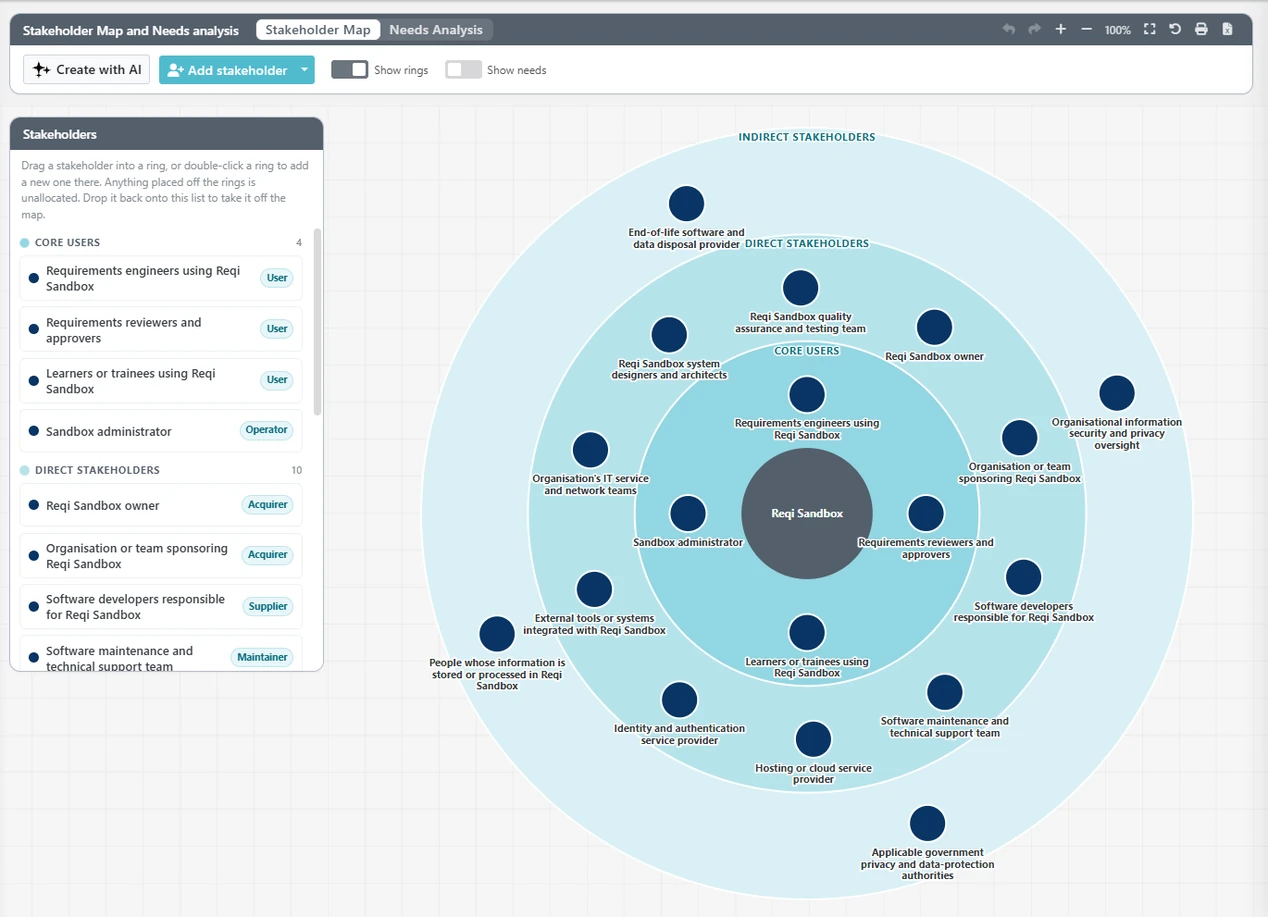
Stakeholders sit on three rings around the system: core for the people who operate, own or are directly bound by it, direct for those who shape it or are affected by it, and indirect for the wider parties whose interests still have to be accounted for. Reqi's AI reads your project documents, proposes who belongs on which ring and why, and you drag stakeholders between rings to refine the picture.
The rings and the stakeholder classes are set per project, so a rail programme and a medical device programme can use the vocabulary their regulators expect.
The needs register
For each stakeholder, Reqi drafts the needs it finds in the source documents, each one tagged with a MoSCoW priority (must, should, could, won't) and a citation to the document and passage it came from, so a reviewer can check the claim rather than take it on trust. You then sort the needs on an importance and urgency grid to decide what the first release has to satisfy.
Sourced, not invented
Every drafted need cites the document behind it. Needs you add by hand sit in the same register with the same fields.
Prioritised two ways
MoSCoW says how negotiable a need is. The importance and urgency grid says in what order to deal with them. Both are visible on the register.
Exported for review
Export the needs register to Excel or print it for a stakeholder workshop, then bring the agreed changes back into the project.
From needs to requirements
A need is what a stakeholder wants. A requirement is what the system shall do to satisfy it, written so that it can be verified. Reqi keeps the two linked: needs are elicited and prioritised in the needs register, then written as requirements in the main register with the need as their origin, so the top of the traceability chain is a stakeholder rather than an assumption. REX then checks each requirement against the INCOSE 42-Point Guide and flows it down the system breakdown structure.
The method is set out in the requirements engineering framework. For the thinking behind it, read defining scope and stakeholder needs and turning stakeholder needs into actionable requirements, which includes a needs-to-requirements worksheet. How the chain continues downstream is on the requirements traceability software page.
Aligned with INCOSE stakeholder needs analysis
The stakeholder map and the needs register follow the INCOSE approach to stakeholder needs and requirements definition: identify the stakeholders, understand their needs in context, prioritise, and transform the needs into requirements that can be verified. Reqi does the first draft of the identification and elicitation from your documents, and keeps the human review in the loop at every step.
What it costs
$190 per month, plus GST
Per project, for one to five projects. Unlimited users on every plan, so stakeholders can review their own needs in the register.
A single project is free for three months, up to 500 requirements, with unlimited users and no card. Full detail on the pricing page.
Stakeholder needs analysis: frequently asked questions
Where do the stakeholders come from?
From your project documents. Reqi's AI reads them, identifies the stakeholders they name or imply, and proposes a ring for each with the source cited. You can add, remove and move stakeholders by hand.
Can I use it without the AI?
Yes. Add stakeholders and needs directly in the register and place them on the map yourself. The AI is a first draft, not a requirement.
What is MoSCoW?
A priority scale: must have, should have, could have, won't have this time. Reqi tags each need with one so that the non-negotiable needs are visible before requirements are written.
Can I export the needs register?
Yes, to Excel, or print it for a review workshop.
Map the stakeholders on one project
Three months free, 500 requirements, unlimited users, no card.
Get started free Book a demo