What Is APQP? The 5 Phases of Advanced Product Quality Planning
Advanced Product Quality Planning (APQP) is a structured, five-phase framework for planning quality into a product before it is built, rather than inspecting it in afterwards. The key word is advanced — meaning “in advance”, not “sophisticated”. Everything else follows from that.
It came out of automotive, it is mandated by IATF 16949, and it has since been copied by aerospace, medical and electronics. Here is where it came from, what the phases actually contain, what it is genuinely good for, and the way it most often fails.
The Five APQP Phases at a Glance
| Phase | Focus | Headline outputs |
|---|---|---|
| 1. Plan and define programme | Voice of the customer, business case, benchmarking | Design and reliability goals, preliminary bill of materials, preliminary process flow, preliminary special characteristics, product assurance plan |
| 2. Product design and development | DFMEA, design for manufacture and assembly, design reviews, prototype build | Drawings, material specs, engineering change control, new equipment and tooling requirements, DVP&R, prototype control plan |
| 3. Process design and development | Process flow diagram, floor plan, characteristics matrix, PFMEA | Pre-launch control plan, process instructions, MSA plan, preliminary process capability plan, packaging specs |
| 4. Product and process validation | Significant production run on production tooling at production rate | MSA results, initial process capability studies, production validation testing, packaging evaluation, production control plan, PPAP submission |
| 5. Feedback, assessment and corrective action | Variation reduction and lessons learned | Customer satisfaction, delivery and service performance, improvements fed into the next programme |
What Is APQP?
APQP is a product quality planning discipline: a defined sequence of phases, each with entry and exit criteria, worked by a cross-functional team, that turns a customer need into a demonstrably capable production process. It is not a test regime and it is not a quality management system. It sits underneath one — IATF 16949:2016 mandates APQP for design and development planning under Clause 8.3.
Structurally it will look familiar to anyone who has worked to the V-model: decompose need into requirements, control the design, control the process, then prove the result with evidence that traces back up. APQP is the manufacturing supply chain’s version of that idea, with the paperwork specified.
Where APQP Came From
Automotive, specifically the North American “Big Three”. The roots go back to the early 1980s, when the US industry was struggling to meet rising consumer quality expectations and losing ground to Japanese manufacturers who were winning on reliability. Ford published the first handbook addressing APQP guidelines for suppliers, with Chrysler and GM following with their own versions.
That created a new problem: three OEMs, three incompatible rulebooks, and a shared supply base drowning in paperwork. AIAG was founded in 1982 by representatives of the three manufacturers to develop a common framework, and the OEMs eventually released the single AIAG APQP Manual in 1994. It was folded into QS-9000 the same year, making it a required framework for automotive suppliers. QS-9000 was later superseded by IATF 16949:2016, which is where the requirement lives today.
Why APQP Exists
The economics are brutal in automotive. A design flaw caught at concept costs an engineer’s afternoon. Caught after tooling, it costs a tool. Caught in the field, it costs a recall across hundreds of thousands of vehicles. APQP is a mechanism for pulling discovery leftwards, which is the same instinct behind shift-left verification and progressive assurance elsewhere in engineering.
Three secondary purposes matter just as much:
- A supply chain contract. An OEM assembling 30,000 parts from thousands of suppliers cannot inspect its way to quality. The manual’s stated intent is that every organisation in the supply chain produces a quality plan supporting a product that satisfies the customer — a common language for delegating quality risk downwards.
- Breaking silos. Cross-functional teams translate the voice of the customer into technical requirements and establish capable production systems. The structure is deliberately aimed at forcing communication across departments that would otherwise hand documents over a wall.
- Evidence. Regulators, litigation and recalls all demand a defensible record of what you knew and when.
The Five Phases in Detail
Phase 1 — Plan and Define Programme
Voice of the customer, business case and benchmarking go in; design goals, reliability and quality goals, a preliminary bill of materials, a preliminary process flow, preliminary special characteristics and a product assurance plan come out. This is turning stakeholder needs into requirements, under a different name.
Phase 2 — Product Design and Development
DFMEA, design for manufacture and assembly, design verification (DVP&R), design reviews and prototype build. Outputs are drawings, material specifications, engineering change control, new equipment, tooling and facilities requirements, and the prototype control plan. The point of doing failure mode analysis here is that it precedes tooling — after tooling, the analysis is a report rather than a decision.
Phase 3 — Process Design and Development
Process flow diagram, floor plan layout, characteristics matrix and PFMEA. Outputs are the pre-launch control plan, process instructions, the measurement systems analysis plan, the preliminary process capability plan and packaging specifications. Phase 2 asks whether the design can work; Phase 3 asks whether it can be made repeatedly.
Phase 4 — Product and Process Validation
A significant production run on production tooling, at production rate, with production people. That qualifier is what gives the phase its teeth — parts made carefully by an engineer on a prototype rig prove nothing about the line. Outputs are MSA results, initial process capability studies (Cpk and Ppk), production validation testing, packaging evaluation, the production control plan, and the PPAP submission as the gate out.
Phase 5 — Feedback, Assessment and Corrective Action
Variation reduction, customer satisfaction, delivery and service performance, and lessons learned fed back into the next programme. This is the phase most often skipped, and it is the only one that makes APQP an improving system rather than a launch checklist.
Are There Five Phases or Six?
Both counts are defensible. The 3rd edition of the AIAG manual adds a “Getting Started” section, numbered 0, ahead of Phase 1 — covering team organisation, scope, sourcing and timing plans. Some documents therefore describe six stages. The 3rd edition also leans harder on gating generally, adding sections on sourcing, change management, APQP programme metrics, risk assessment mitigation plans and gated management. One further change catches people out: the control plan is now a standalone manual, though it still appears as a deliverable in phases 2, 3 and 4.
How APQP Is Actually Used
As a flowdown chain. The mechanism is traceability from customer need to requirement to special characteristic to design control to process control to measured evidence. Special characteristics are the spine: identify the few dimensions or properties where failure is safety-critical or function-critical, then carry them explicitly through DFMEA, PFMEA and the control plan so they receive elevated control on the line.
As gates, not documents. Each phase has entry and exit criteria reviewed by the cross-functional team. A phase is finished when the team agrees the exit criteria are met, not when the folder is full.
As a supplier approval mechanism. This is the part with teeth. No approved Part Submission Warrant, no production shipments, no payment.
Beyond launch. The same tools apply in scaled form to post-release changes — design, material or supplier changes, and incidental ones such as environment or degradation. This is why a change of moulding supplier three years into production still triggers re-validation, and why APQP overlaps heavily with change management and configuration management practice.
APQP vs PPAP: What Is the Difference?
APQP is the process; PPAP is the evidence that the process worked. The Production Part Approval Process is the submission package a supplier hands the customer to prove that planning, FMEAs, control plans and validation were actually effective, and that the process can make conforming parts at rate. Customers can request PPAP at any point, but typically do so for new parts or when changes are made to existing parts or processes.
Put plainly: a strong PPAP submission is a symptom of good APQP, and it is the only symptom the customer gets to inspect. The relationship is the same one between verification and validation activity and the evidence pack that closes it out.
What Results APQP Is Meant to Deliver
Worth separating the claims by how defensible they are.
Well-evidenced by mechanism: fewer late design changes, because DFMEA and design verification precede tooling; demonstrated process capability before volume, because Cpk and Ppk come from the significant production run; a documented, auditable trail; and a common basis for supplier–customer negotiation. These follow from the structure itself.
Claimed widely, measured loosely: reduced internal nonconformances and customer escapes, improved supplier delivery performance, higher customer satisfaction, and lower costs from rework, returns, redesigns and warranty claims. Reduced infant-mortality cost on new products — but only where APQP is run as a genuine prevention strategy rather than a customer document generation exercise.
Treat specific percentages with scepticism. Most published figures come from consultancies and software vendors selling APQP services; one such vendor claims launches accelerated by 37% and rework costs down 29%, which is marketing material, not a controlled study. The general pattern reported is reduced defect rates and warranty claims, but almost nobody runs the counterfactual.
The honest framing: APQP is a risk-management discipline whose payoff is mostly in avoided catastrophes, which are inherently hard to count. Its persistence across four decades and multiple industries is itself reasonable evidence that it works, but the mechanism is more convincing than the metrics.
Where APQP Has Spread
Aviation, medical and electronics have all launched their own versions, because the framework scales to any type of manufacturing. Aerospace formalised it in AS9145, released in 2016 for the space, aviation and defence industries. AS9145 sits alongside AS9100, AS9102, AS9103 and AS9110, relates specifically to section 8 of AS9100, and culminates in a PPAP submission of 11 elements — fewer than automotive’s 18, reflecting lower volumes and the existing First Article Inspection regime.
Medical device work tends to map APQP onto ISO 13485 design controls rather than adopt it wholesale — the obligations are already there, so the value is in the phasing rather than the paperwork. In automotive systems engineering it remains the default operating rhythm for any new programme.
The Main Failure Mode
APQP degrades into a documentation ritual whenever the artefacts are produced to satisfy the customer rather than to inform the design. Practitioners routinely observe that it is not genuinely practised even where it is nominally in place.
The tell is a DFMEA written after the design is frozen, or a verification plan assembled retrospectively to match tests already run. The paperwork is compliant and the risk reduction is zero. This is also why ownership matters: if verification plans are written by whoever needs the tick rather than by whoever understands the failure mode, you get the artefact without the benefit.
The practical defence is boring and effective — date the artefacts, and check that the DFMEA predates the drawing release, the PFMEA predates the tooling order, and the control plan predates the run. Sequence is the one property of APQP that cannot be faked retrospectively without leaving a trace.
Frequently Asked Questions
What is APQP?
APQP (Advanced Product Quality Planning) is a five-phase framework for planning quality into a product before it is built. A cross-functional team works through defined phases with entry and exit criteria, translating customer needs into requirements, special characteristics, design controls, process controls and measured evidence of capability.
What are the five phases of APQP?
Plan and define programme; product design and development; process design and development; product and process validation; and feedback, assessment and corrective action. The 3rd edition of the AIAG manual adds a Getting Started section numbered 0, so some sources describe six stages.
What is the difference between APQP and PPAP?
APQP is the planning process; PPAP is the evidence that it worked. The Production Part Approval Process is the submission a supplier makes to prove the planning, FMEAs, control plans and validation were effective and that the process can produce conforming parts at rate. It is the gate out of APQP Phase 4.
Is APQP mandatory?
For automotive suppliers, effectively yes. IATF 16949:2016 mandates APQP for design and development planning under Clause 8.3, and it was a requirement under QS-9000 before that. Outside automotive it is contractual rather than universal, though aerospace has its own equivalent in AS9145.
Does APQP apply outside automotive?
Yes. Aerospace formalised it as AS9145 in 2016, with an 11-element PPAP rather than automotive’s 18. Electronics manufacturers have adopted variants, and medical device organisations generally map APQP thinking onto ISO 13485 design controls rather than adopting the automotive manual wholesale.
Related guides
- FMECA explained — the analysis behind DFMEA and PFMEA
- The V-model — the same left-to-right, prove-it-back-up logic
- Requirements traceability — the flowdown chain APQP depends on
- Verification and validation — what Phase 4 is really doing
- Systems engineering in automotive — where APQP was born
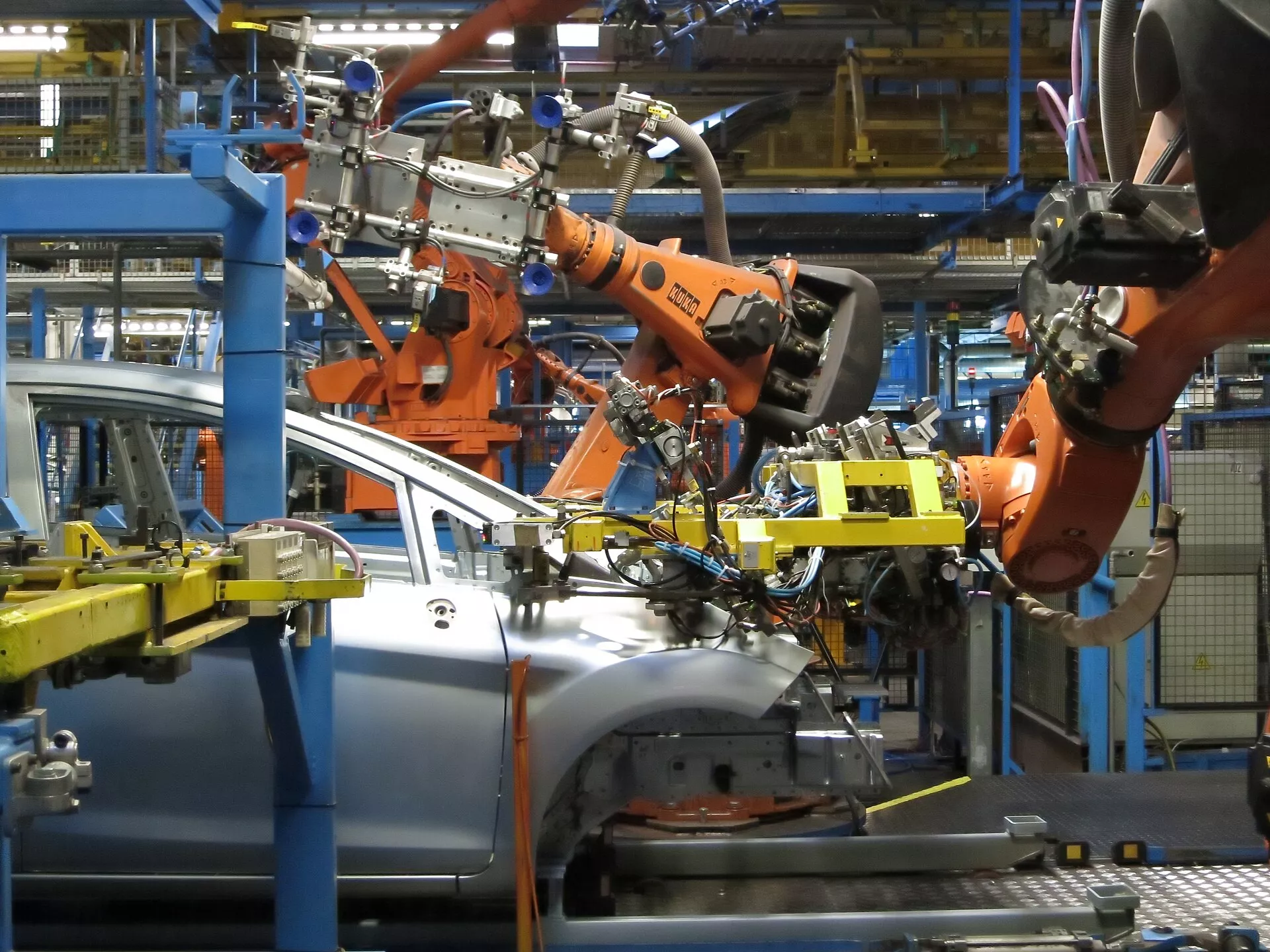
Featured image: GillyBerlin, Wikimedia Commons, licensed CC BY 2.0, resized.