Requirements engineering is the work of finding out what a system must do, writing it down so that it can be built and verified, and keeping that record under control as the project changes. Most troubled projects can trace their problems back to requirements that were missing, ambiguous or never properly agreed, which is why the discipline repays careful study.
This hub is for systems engineers, business analysts and project engineers who write, review or manage requirements. It follows the order of the work: eliciting stakeholder needs, writing requirements that are clear and testable, the main requirement types and specification documents, managing change, baselines and traceability, and the tools and AI assistants now used for requirements management.
Start here
- What is requirements engineering? — complete guide to elicitation, analysis, specification and validation of what a system must do
- Capturing and defining requirements — practical guide to turning vague stakeholder needs into precise, testable requirements, with traps to avoid
- Functional vs non-functional requirements — 20 paired examples across five domains, plus a 4-question test for telling them apart
- INCOSE requirements quality rules — all 42 INCOSE rules explained with before-and-after examples you can copy
- Requirements traceability matrix — what a traceability matrix contains, why it matters, and a worked example
Eliciting stakeholder needs
Good requirements start with a clear scope and an honest picture of what stakeholders actually need.
- Defining scope and stakeholder needs — the upfront scoping work that comes before writing requirements and prevents scope creep
- Stakeholder needs to requirements worksheet — a 7-column worksheet with five real stakeholder statements worked through end to end
- Requirements definition — the practical steps for turning stakeholder needs into clear, complete, verifiable requirements
Writing good requirements
These guides cover the wording rules and quality tests that make a requirement unambiguous and verifiable.
- SMART requirements — what Specific, Measurable, Achievable, Relevant and Time-bound mean, with examples
- Shall vs should vs will vs must — a requirements language rule card and eight bad requirements rewritten into testable ones
- Acceptance criteria for user stories — how to write them in Given-When-Then form, with good and bad examples
Requirement types and specification documents
Different stakeholders and lifecycle stages call for different kinds of requirements and the documents that hold them.
- User requirements — what users actually need, how user requirements differ from system requirements, and how to gather them
- Operational requirements from a CONOPS — how to translate a Concept of Operations into specific, verifiable operational requirements
- Business Requirements Specification (BRS) — what goes in a BRS and how to write one that holds up
- Product Design Specification (PDS) — what to include in a PDS and how to write one that actually gets used
- Requirement vs specification — the difference between what a system must do and how, and which comes first
Managing requirements, change and traceability
Once requirements are written they have to be allocated, baselined, traced and changed under control.
- Systems engineering vs requirements management — how requirements management fits within systems engineering and where the two overlap
- Requirements baseline — what an agreed, frozen requirements set is and how to establish one for change control
- Requirements change management — assessing impact, controlling change and keeping traceability intact when requirements move
- Requirement allocation — how to divide a high-level requirement among the subsystems that deliver it
- Requirements and artifacts — how engineering artifacts differ from requirements and how linking them keeps projects auditable
Requirements tools and AI
Choosing a requirements management tool, and using AI sensibly within it, are now part of the job.
- Best requirements management tools — DOORS, Jama, Polarion, codebeamer and others compared, with guidance on choosing
- IBM DOORS tutorial for beginners — a decoder for eight confusing DOORS terms and a ten-step first-project walkthrough
- Reqi requirements management tool — what Reqi does for capturing and tracing requirements, and how it compares to legacy tools
- Using LLMs to write and review requirements — what large language models do well for drafting and checking requirements, and the risks
- AI in requirements management — which requirements management tasks AI now automates and where humans still lead
- Elicitation, writing and analysis in the AI era — what to automate, what to keep human, and where AI genuinely helps
Related hubs: systems engineering, MBSE and modelling, safety and hazards. See also: safety requirements, verification vs validation, writing a CONOPS.
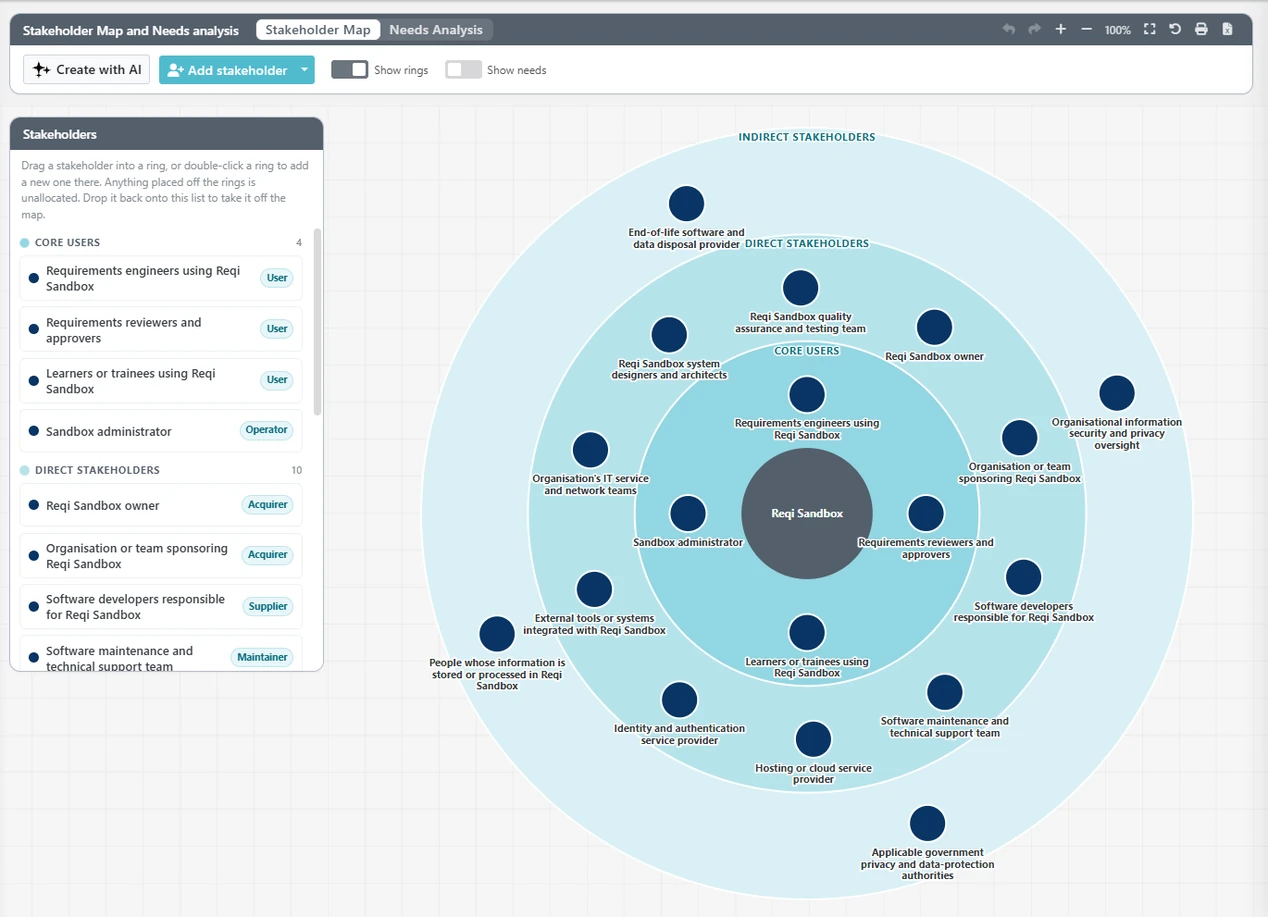
AI-Automated Product Specifications: From Stakeholder Needs to Handover
How Reqi uses AI to draft a full product spec as a traceable chain: stakeholder needs, requirements, architecture, acceptance criteria and verified evidence.

What Is APQP? The 5 Phases of Advanced Product Quality Planning
APQP explained: the five phases, where it came from, how PPAP fits, what it actually delivers, and the documentation-ritual failure mode to avoid.

Best Requirements Management Tools in 2026 (and DOORS Alternatives)
A comparison of the best requirements management tools - DOORS, Jama, Polarion, codebeamer and Reqi - what to look for, and how to choose the right one for your team.

Using LLMs to Write & Review Requirements: A Practical Guide
How to use large language models to draft, quality-check and de-conflict requirements — what they are good at, and the real risks to manage.

Understanding the Differences Between Functional and Non-functional Requirements
20 paired functional and non-functional requirements examples across five domains, plus a 4-question test to tell which type a requirement is.

Requirements Baseline in Systems Engineering
A requirements baseline is an agreed, frozen set of requirements that anchors design and change control. What it is and how to establish one.

SMART Requirements: Specific, Measurable, Attainable, Relevant, and Time-Bound
SMART requirements are Specific, Measurable, Achievable, Relevant and Time-bound. What each test means, examples, and how to apply them.

INCOSE Requirements Quality: The Complete 42-Rule Guide to Writing Excellent Requirements for Systems Engineers
INCOSE's 42 rules for writing good requirements, explained with before/after examples you can copy. Turn vague specs into clear, testable requirements.

RAID vs RAIDOC: A Comprehensive Guide to Project Uncertainty Management Frameworks
RAID tracks Risks, Assumptions, Issues and Dependencies; RAIDOC adds Opportunities and Constraints. The difference and when to use each.

What Makes a Requirement a Safety Requirement? The Critical Link to Hazard Control
A safety requirement is one whose failure could cause harm. What makes a requirement a safety requirement, and how it differs from a normal one.

The Key to Successful Projects: Capturing and Defining Requirements
How to turn vague stakeholder needs into precise, testable requirements — elicitation, definition, scoping and traceability, with the traps to avoid.

Definition of Operational Requirements: From CONOPS to Actionable Requirements
How to translate a Concept of Operations (CONOPS) into specific, verifiable operational requirements engineers can build and test against.

Requirements Definition in Systems Engineering: A Practical Guide
How to turn stakeholder needs into clear, complete, verifiable requirements — the practical steps of requirements definition, with the traps to avoid.

Requirements and Artifacts in Systems Engineering: A Comprehensive Guide
What artifacts are in systems engineering, how they differ from requirements, and the relationship that keeps a project traceable and auditable.
Welcome to Reqi: Your Ultimate Requirements Management Tool
Reqi is a modern requirements management tool for capturing, organising and tracing requirements fast. What it does and how it compares to legacy tools.

The Role of Requirement Allocation in Systems Engineering
Requirement allocation divides a high-level requirement among the subsystems that deliver it. Why it matters and how to allocate requirements well.

Mastering Requirements Change Management
Requirements change management handles changes without chaos — assessing impact, controlling change, and keeping traceability. How to do it well.

Transforming Stakeholder Needs into Requirements: Best Practices
The 7-column worksheet for turning what stakeholders actually say into testable requirements — with five real statements worked through end to end.

Shall vs Should vs Will vs Must: What’s the Difference and Why Does It Matter?
What each modal verb binds you to, plus the requirements language rule card and eight bad requirements rewritten into testable ones.

Introduction to DOORS for Beginners
A beginner tutorial for IBM DOORS and DOORS Next: a decoder for the eight terms that confuse everyone, plus a ten-step first-project walkthrough.

Requirement vs. Specification: What is the difference?
A requirement states what a system must do; a specification states how. The key differences, which comes first, and how they link via traceability.

Understanding User Requirements in Systems Engineering
User requirements describe what the people using a system actually need. What they are, how they differ from system requirements, and how to gather them.

Mastering the Ultimate Product Design Specification (PDS)
A Product Design Specification states everything a new product must be and do. What goes in a PDS and how to write one that actually gets used.

Acceptance Criteria for User Stories: Purposes, Formats, Examples, and Best Practices
Acceptance criteria define when a user story is 'done'. How to write them with Given-When-Then, good vs bad examples, and best practices.

Understanding the Importance of Verification and Validation in System Engineering
Verification checks a system against its spec; validation against the real need. The difference, the four verification methods, and where each fits.